
As the Global Fund prepares for its Grant Cycle 8 (GC8), a significant opportunity has arisen for the youth constituency to articulate its priorities and influence the direction of global health funding. A recent two-day workshop convened young leaders from a variety of organizations to strategize on key areas, aiming to not only impact the upcoming Civil Society Organisations (CSOs) Charter but also to reshape global health funding mechanisms.
From November 13–14, 2025, the Monomotapa Hotel hosted a dynamic Priority Setting Workshop where My Age Africa, in collaboration with youth-led organizations under the COMPASS project, forged a unified approach to influencing the Global Fund agenda. Guided by Dr. Tobaiwa, participants explored the evolving Global Fund architecture, examined new GC8 focus areas, and analyzed how young people can meaningfully contribute to upcoming funding strategies.
The workshop underscored the pressing need to align youth priorities with both national and global discussions. Participants voiced a shared desire to strengthen their representation within high-level Global Fund and Country Coordinating Mechanism (CCM) processes. A central concern was that without meaningful youth engagement, the distinct experiences and challenges encountered by young people would continue to be marginalized.
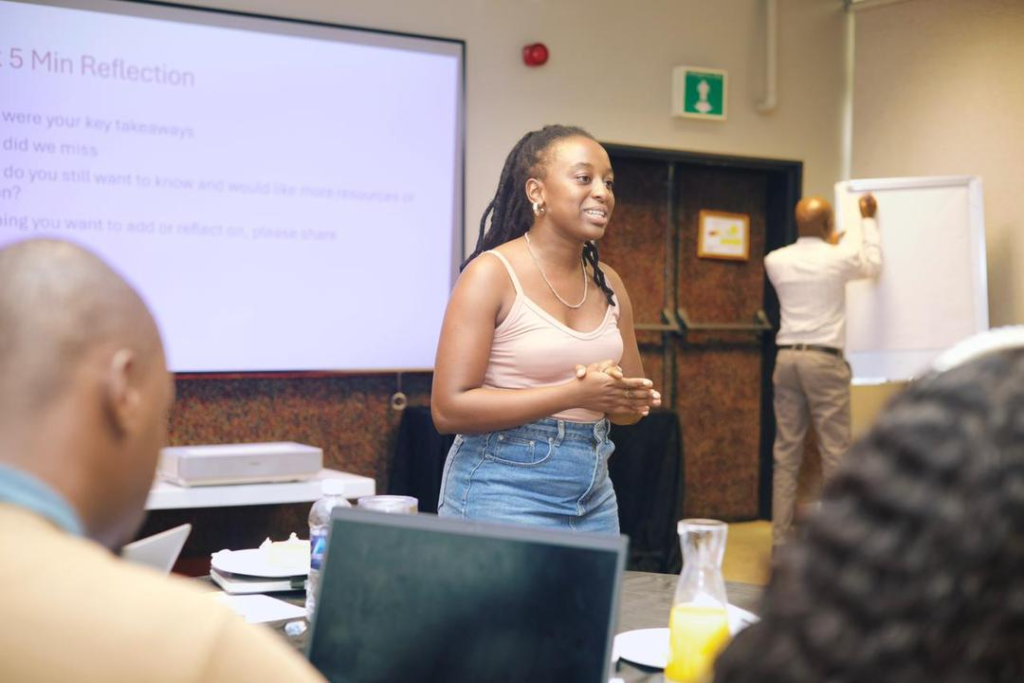
A key takeaway from the workshop was the observed shift in technical assistance requirements. The Global Fund is now encouraging collaborative resource mobilization, moving away from individual country applications. This strategic pivot presents an opportunity for youth constituencies to cultivate partnerships that leverage collective expertise, thereby enhancing their capacity to implement impactful interventions.
The workshop served as a critical foundation for youth-led organizations to consolidate their priorities and align them with the objectives of GC8.
By developing a unified voice, the youth constituency can catalyze transformative social change and advocate for health interventions that genuinely reflect their needs. Creating a healthier, more equitable future is not merely a possibility but a responsibility that young people must champion.
Looking ahead, it is evident that youth must transition from being participants in discussions about global health to becoming leaders within the field.
Their perspectives and aspirations will inform the strategies that ultimately impact millions, ensuring that all voices are heard and considered in the ongoing effort to improve global health outcomes.