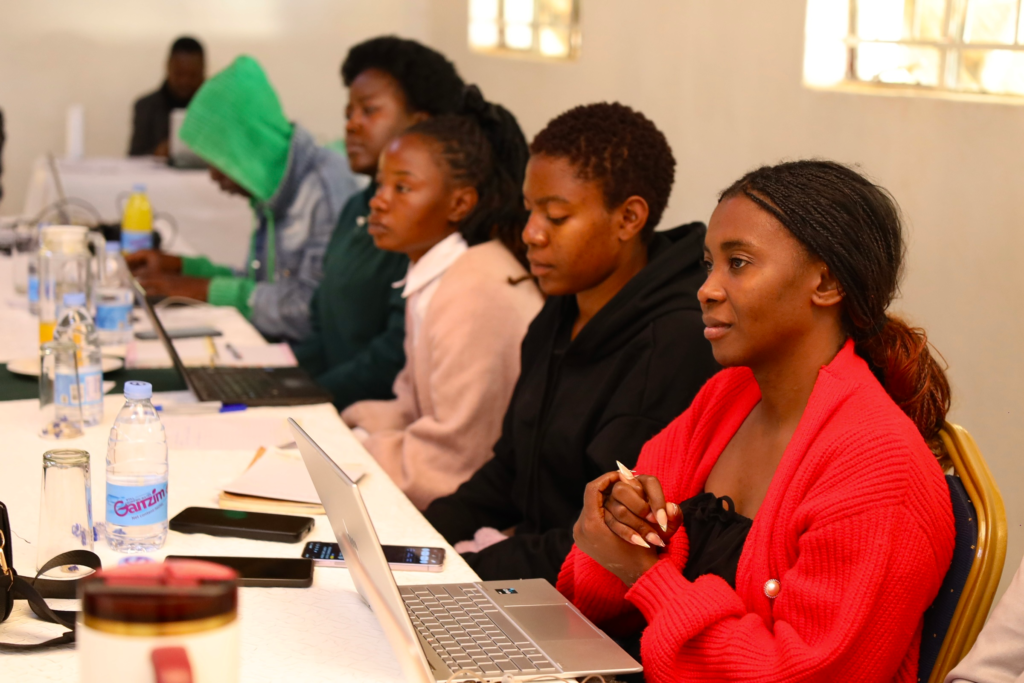
The validation of the Sexual and Reproductive Health and Rights and Justice (SRHRJ) Country Advocacy and Accountability Partnership Strategy (CAAPS) 2026–2028 marked another important step towards strengthening coordinated advocacy for sexual and reproductive health and rights in Zimbabwe. The two-day workshop that was held in Chinhoyi brought together members of the SRHRJ Consortium, feminist organisations, youth leaders, civil society organisations, and human rights defenders to review and validate the draft strategy before its implementation.
The strategy, developed through months of consultations, stakeholder mapping, and organisational capacity assessments, seeks to provide a common framework for advocacy, accountability, and collaboration among organisations working to advance sexual and reproductive health and rights. The validation workshop ensured that the final document reflects the priorities and realities of the communities and organisations it is intended to serve.
Participants reviewed each section of the strategy and provided recommendations to improve its clarity, relevance, and practicality. Discussions focused on strengthening collaboration between organisations, promoting meaningful youth participation, improving accountability mechanisms, and ensuring that the strategy responds to the evolving sexual and reproductive health needs of women, girls, young people, persons with disabilities, and other marginalised groups.
One of the key points of the workshop was the recognition that sustainable progress cannot be achieved through isolated efforts. Participants emphasised the importance of building stronger partnerships and coordinating advocacy initiatives to maximise impact. The discussions also reinforced the need to amplify community voices, particularly those of young people, whose experiences and perspectives are critical in shaping effective advocacy and policy interventions.
The workshop concluded with unanimous agreement on the proposed amendments to the draft strategy, which will be incorporated into the final CAAPS 2026–2028 document. Once finalised, the strategy will guide the Consortium and its partners in implementing coordinated advocacy initiatives aimed at promoting equitable access to sexual and reproductive health services, protecting human rights, and strengthening accountability within the SRHRJ sector.
As Zimbabwe continues to address challenges affecting sexual and reproductive health and rights, the workshop demonstrated the value of inclusive dialogue and collective decision-making. By bringing together diverse stakeholders around a shared vision, the validation process has laid a solid foundation for stronger partnerships and more effective advocacy over the next coming years.