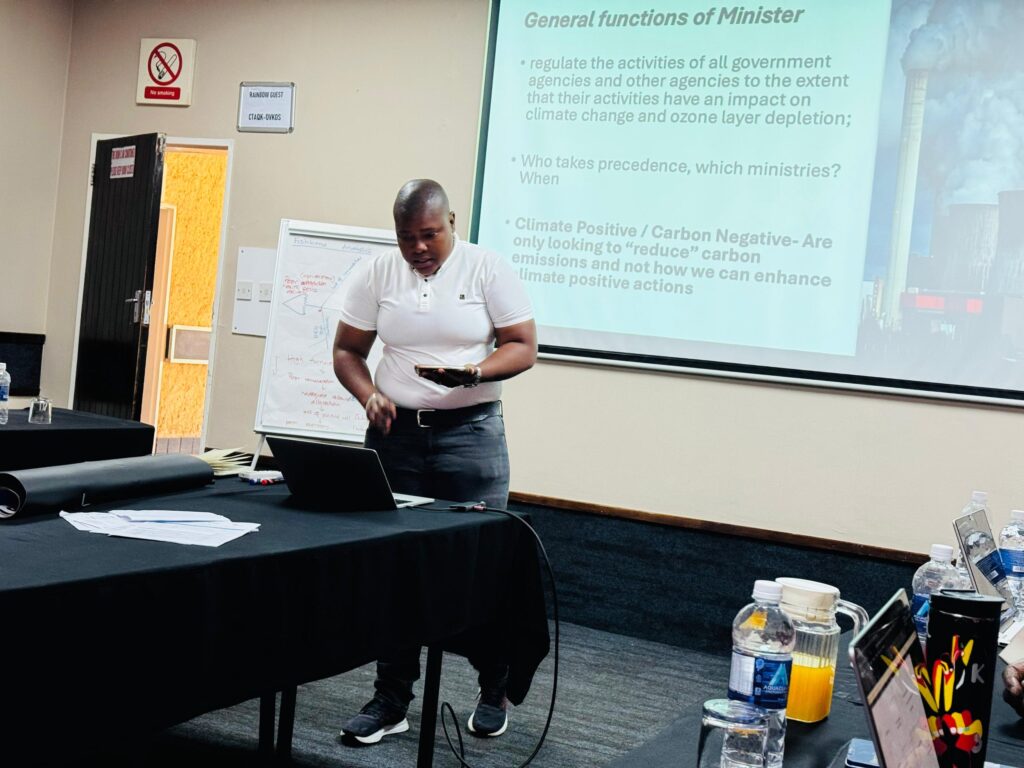
The intersection of climate change and public health is increasingly recognized as a critical area for policy intervention, and recently, My Age Africa partnered with Population Services Zimbabwe (PSZ) to convene a detailed analysis of the Climate Change Management Bill, 2025, which focused on the Bill’s implications for health, sexual and reproductive health and rights (SRHR), and the promotion of gender-responsive climate governance.
The meeting served as a platform for civil society organizations, youth advocates, and health professionals to collaboratively assess the Bill, identify potential shortcomings, and formulate recommendations in anticipation of upcoming public hearings.
Participants lauded the Bill’s overarching objectives, the establishment of a National Climate Fund, and its emphasis on public participation and robust institutional coordination. These elements were recognized as crucial for harmonizing economic development with low-emissions strategies and safeguarding the well-being of future generations.
A significant outcome of this collaborative effort was the formation of a National CSOs Technical Working Group on Climate and Health, which will be instrumental in coordinating advocacy efforts, consolidating recommendations, and actively engaging with both the government and parliament throughout the legislative process.
While acknowledging the Bill’s strengths, critical gaps were identified that could potentially lead to the underrepresentation of health and gender-specific concerns. Although the Bill references “human health and welfare,” it lacks explicit provisions for bolstering health system resilience, ensuring the continuity of SRHR services, or addressing maternal and reproductive health needs during climate-related disasters.
Furthermore, gender provisions were deemed broad and lacking measurable indicators, while monitoring and reporting systems were found to be deficient in their requirements for gender-disaggregated or health-related data.
Discussions extended beyond the confines of the Bill to encompass Zimbabwe’s broader health financing challenges, particularly in light of recent reductions in global funding. Participants emphasized the urgent need for flexible domestic financing mechanisms capable of shielding essential programs, such as HIV prevention, TB treatment, and family planning, from the adverse effects of external economic shocks.
Looking ahead, the group has committed to developing an advocacy brief that articulates the alignment of proposed amendments with constitutional rights and global obligations, through anchoring the Bill within these established frameworks, Zimbabwe has the opportunity to ensure that its climate action initiatives are inclusive, gender-responsive, and effective in safeguarding public health for generations to come.