The question of how to transform faith communities into active partners for gender justice, rather than perceiving them as obstacles, was a central theme at the MenEngage Africa SRHR Learning and Exchange Symposium, PROGRESS 2026.
Held in Mombasa, Kenya, from August 12th to 14th, this symposium brought together a diverse group of approximately 300 advocates, policymakers, youth leaders, civil society organisations, healthcare providers, researchers, development partners, and traditional and religious leaders from across the African continent. This convergence occurred at a critical juncture, as sexual and reproductive health and rights (SRHR) advocates face increasing challenges from shrinking civic space and growing opposition to their vital work.
My Age Africa played a pivotal role in two key discussions where this opposition is often most pronounced, where the imperative for partnership was most evident: the Interfaith Pre-Conference and UNESCO’s parallel session on youth as researchers and agents of norm change.
Reclaiming Faith as an Ally, Not an Obstacle
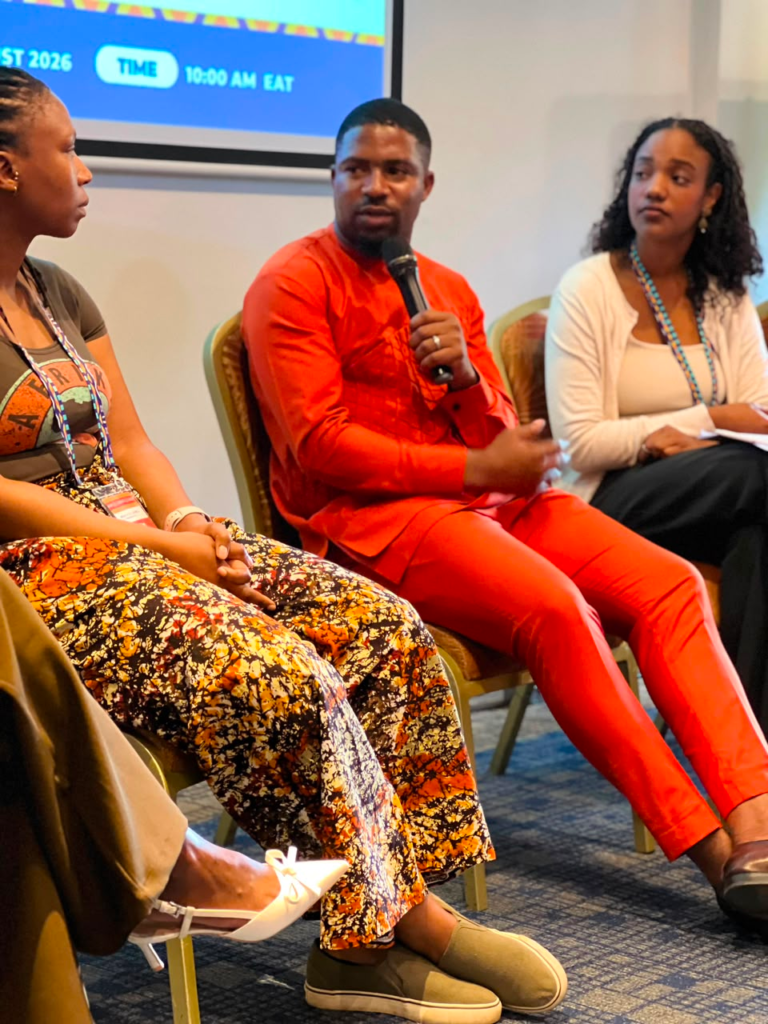
At the Interfaith Pre-Conference, which preceded PROGRESS 2026, My Age Africa board member Ngoni Mutume offered a tangible pathway forward to address the initial question. He outlined a strategic plan centred on a coordinated interfaith advocacy network. This network empowers religious leaders to collaborate rather than operating in isolation, employing messaging that resonates with shared faith values instead of opposing them.
The plan emphasises the importance of equipping religious leaders with the training and confidence necessary to counter anti-rights narratives effectively. Furthermore, it advocates for advocacy strategies tailored to the specific political and cultural realities of each nation, moving beyond a universal script. Crucially, the initiative seeks to reclaim the concept of “family values” itself, arguing for its redefinition to encompass dignity and protection, rather than ceding it to those who exploit it to justify exclusion.
The underlying message was clear: culture and faith possess the potential to be catalysts for gender equality, not impediments. All too often, SRHR advocacy has viewed religious institutions as adversaries to be managed. Ngoni Mutume’s contribution powerfully reframed them as constituencies to be organised, empowered, and integrated into the broader coalition on their own terms.
Youth as Researchers, Not Just Beneficiaries
Days later, this same conviction resonated on a different platform. UNESCO convened a parallel session titled “Youth as Researchers, Advocates and Agents of Norm Change”. This session drew upon two of UNESCO’s impactful flagship programmes: Transforming MEN’s MEN’talities, which actively engages men and boys as allies in the pursuit of gender equality across Eastern Africa, and O3/O3 Plus, UNESCO’s continent-wide Comprehensive Sexuality Education initiative, alongside its O3 Young Changemakers network of youth peer counselors and researchers.
The session was built upon a straightforward yet incisive argument: young people across Africa are frequently invited to SRHR convenings as attendees, yet are rarely positioned as researchers, generators of evidence, and co-designers of the solutions that directly impact their lives. The statistics underscore the gravity of the situation.
Adolescent girls and young women aged 15 to 24 constitute 28% of sub-Saharan Africa’s youth population but tragically account for 44% of new HIV infections. In West and Central Africa, an estimated four out of ten girls are still affected by child marriage before reaching the age of 18. In Kenya, a government report from January 2026 documented femicide at an alarming rate of nearly one woman killed every day. UNESCO’s session utilised youth testimony, film, and compelling field evidence to bring these stark figures to the forefront of the discussions and ensure their inclusion in the outcome document of PROGRESS 2026.
My Age Africa’s Executive Director, Onward Gibson, contributed to the panel discussion, offering the organisation’s perspective on the critical role of engaging religious leaders in shifting the detrimental social norms that underpin these statistics and in advancing SRHR outcomes for young people.