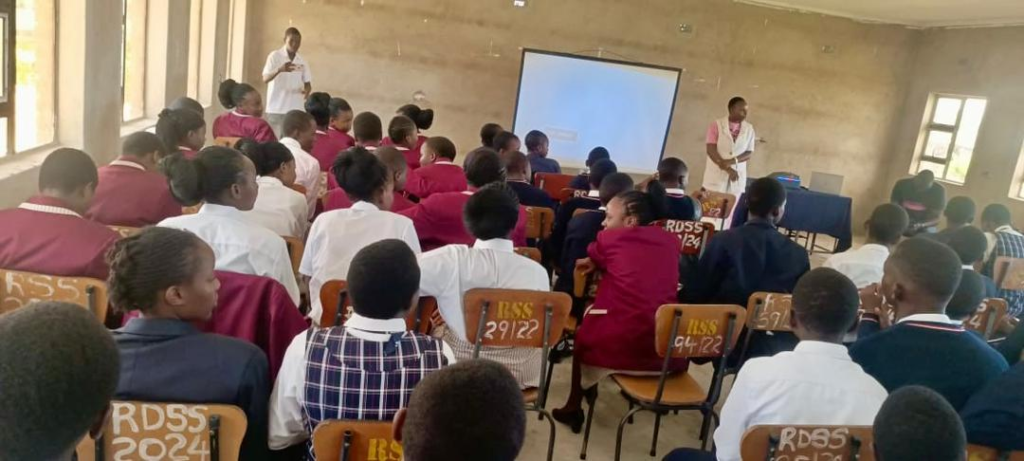
My Age Africa facilitated film screening sessions through an Impact Community Screening and In-House Session, where young people and stakeholders came together to explore the intersection of climate change and sexual and reproductive health and rights (SRHR) through a series of facilitated film screenings. The sessions provided a platform for reflection, discussion, and identification of key challenges affecting women, girls, and the wider community.
During the discussions, participants highlighted several pressing issues linked to climate change and community wellbeing. Road accessibility was raised as a significant challenge, particularly during periods of heavy rainfall.
Poor road conditions not only hinder mobility but also contribute to overflowing wells and boreholes, making safe water access difficult. This has direct implications for hygiene and health, especially menstrual hygiene management (MHM), as pit toilets often fill up, sanitary wear disposal becomes a challenge, and girls and women face difficulties managing their menstruation safely and with dignity.
The sessions also revealed concerning trends among adolescent girls and young women (AGYW), who, in some cases, are engaging in transactional sex to cope with economic hardship brought on by changing climate conditions. This exposes them to sexually transmitted infections (STIs), including a recently reported local condition referred to as “blue sick”, as well as sexual and gender-based violence (SGBV).
These discussions underscored the urgent need for community-led solutions that address both
climate resilience and SRHR. Participants emphasized the importance of improved infrastructure, accessible water sources, safe sanitation facilities, and targeted programs that empower young women and girls while creating opportunities for youth engagement.
The screening sessions proved to be a vital space for raising awareness, fostering dialogue, and identifying community priorities, reinforcing the link between environmental challenges and social wellbeing. Through highlighting these intersections, the sessions aimed to inform future programming that strengthens community resilience, promotes SRHR, and ensures that vulnerable populations are supported in adapting to the impacts of climate change.